

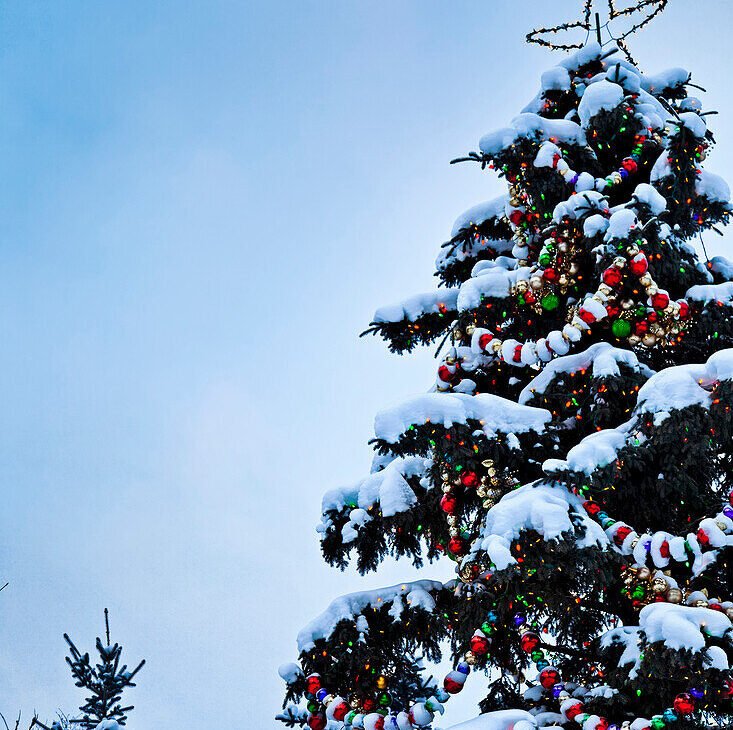
Ah, the Christmas tree — twinkling lights, glittering baubles, and that unmistakable pine scent that screams the holidays are here! But have you ever stopped mid–mulled wine to wonder where this whole tree tradition actually started? Turns out, our beloved festive fir has some pretty fascinating roots that stretch back centuries, deep into the snowy woods of old Europe.
Ancient Roots: Evergreens Before Christmas
Pagan Traditions and Winter Solstice Celebrations
Long before Christmas was even a thing, ancient Europeans were already a bit obsessed with evergreens. Pagans across the continent celebrated the Winter Solstice — the shortest day of the year — by decorating their homes with greenery. These plants symbolised life, renewal, and hope, even when the world outside was cold and barren.
The Romans had Saturnalia, a wild week of feasting and gift-giving honouring Saturn, the god of agriculture. They decorated their homes with green boughs — a cheerful reminder that spring would eventually return. Meanwhile, the Celts and Norse people saw evergreens as sacred symbols of endurance, often using fir or pine to ward off evil spirits during the darkest nights of winter.
The Symbolism of Evergreens in Ancient Cultures
Evergreens weren’t just pretty plants — they were loaded with meaning. In Germany, for instance, oak trees were revered by pagans long before Christianity took hold. People believed that the unchanging green leaves represented eternal life, a concept that easily blended into later Christian symbolism.
Medieval Europe: From Sacred Woods to Church Decor
Early Church Attitudes Toward Pagan Customs
When Christianity swept across Europe, early church leaders weren’t exactly thrilled about pagan traditions. However, as is often the case, old customs proved hard to kill. Over time, the Church decided it was easier to adapt these practices rather than ban them entirely. So, evergreens began finding their way into church celebrations, but now with a Christian twist — representing eternal life through Christ.
The “Paradise Tree” in Medieval Plays
By the 15th century, a new custom appeared: the “Paradise Tree.” In Germany, medieval mystery plays told the story of Adam and Eve, and the Tree of Knowledge was represented by an evergreen hung with apples. This “Paradise Tree” was often set up on 24 December, the feast day of Adam and Eve, and just like that, the Christmas tree’s modern ancestor was born.
The German Touch: Birthplace of the Modern Christmas Tree
How the Germans Brought the Tree Indoors
It’s fair to say that Germany gave us the Christmas tree as we know it. Around the 16th century, families began bringing small evergreens into their homes and decorating them with paper roses, apples, and candles. Martin Luther, the Protestant reformer, is said to have added candles to a tree to recreate the beauty of stars shining through winter branches — and honestly, that’s a pretty poetic move.
Candles, Apples, and Gingerbread: Early Decorations
Forget glass baubles and tinsel; early Christmas trees were all about natural beauty and homemade touches. Apples stood for the forbidden fruit, while nuts and sweets represented abundance and joy. Gingerbread hearts and marzipan figures soon joined the mix, turning these trees into edible displays of holiday cheer.
The Royal Influence: When Christmas Trees Hit Britain
Queen Charlotte and the First Royal Christmas Tree
Before Queen Victoria made it fashionable, Queen Charlotte, the German wife of King George III, brought the first known Christmas tree to England in the late 1700s. It was adorned with sweets and small toys — a delight for royal children and courtiers alike.
Prince Albert and Queen Victoria: A Trend Goes Viral
Fast forward to the 1840s, and Prince Albert — another German royal — introduced the tree as part of the Victorian Christmas. A famous illustration in the Illustrated London News showed the royal family gathered around a lavishly decorated tree, and that image went absolutely viral (Victorian-style, of course). Before long, British homes everywhere had a Christmas tree sparkling in the parlour.
Across the Channel: European Twists on the Tradition
The Scandinavian Yule Tree
In the Nordic lands, evergreens were already linked to Yule, a midwinter festival celebrating the sun’s return. When the Christmas tree arrived, Scandinavians added their own touches — straw ornaments, carved wooden figures, and tiny flags — creating a cosy, rustic vibe still popular today.
French and Austrian Festive Touches
The French added elegance (as they do) with ribbons and delicate sweets, while Austrian trees gleamed with gilded nuts and crystal ornaments. Each region made the tradition uniquely its own, mixing local craftsmanship and religious symbolism.
Modern Evolution: Lights, Baubles, and Artificial Twigs
Electric Lights and the Industrial Revolution
The late 19th century brought a bright idea — literally. With the invention of electricity, candles (beautiful but a bit of a fire hazard) were gradually replaced by twinkling electric lights. In 1882, Edward H. Johnson, an associate of Thomas Edison, displayed the very first electric Christmas tree lights in New York, and it wasn’t long before Europe caught on.
The Industrial Revolution also helped Christmas trees go mainstream. Factories began producing glass ornaments, metal tinsel, and paper decorations in bulk. Suddenly, what had once been a luxury reserved for the upper classes became a cheerful tradition for everyday households. By the early 20th century, trees of all sizes and styles were appearing in parlours across Britain and continental Europe.
Post-War Christmas and the Boom of Modern Decor
After World War II, Christmas trees became more than just a symbol of festivity — they represented hope and unity. Aluminium trees and artificial firs emerged during the 1950s, offering easy setup and storage. The 60s and 70s saw the rise of themed decorations, while the 80s embraced excess with glitter, bright lights, and colour-coordinated baubles.
Today, Christmas trees come in every form imaginable — from eco-friendly wooden trees to LED-lit sculptures. Yet, no matter how flashy or minimal they get, the spirit behind them remains unchanged: bringing warmth and joy to the darkest days of winter.
Fun Facts You Didn’t Know About Christmas Trees
The Tallest Christmas Tree Ever Displayed
The record for the tallest Christmas tree goes to a 67-metre (221-foot) Douglas fir displayed in Seattle, USA, back in 1950. But Europe’s no stranger to giant trees either — cities like Oslo, Prague, and London all compete each year for the most stunning display. In fact, the massive Christmas tree in London’s Trafalgar Square has been a yearly gift from Norway since 1947, symbolising friendship between the two nations.
Quirky Old European Customs Still Alive Today
-
Germany: Some families still hide a pickle ornament in their Christmas tree. The first child to find it on Christmas morning gets an extra present!
-
Ukraine: Decorators sometimes hang artificial spider webs on their trees — a nod to a folk tale where spiders spun webs of gold to help a poor family.
-
Poland: Trees are often adorned with real candles and edible treats, keeping alive the early traditions of sweetness and light.
-
Estonia: Public Christmas trees date back to the early 1400s, where guild members danced around them before burning them in celebration — a slightly fiery finale, if you ask me.