
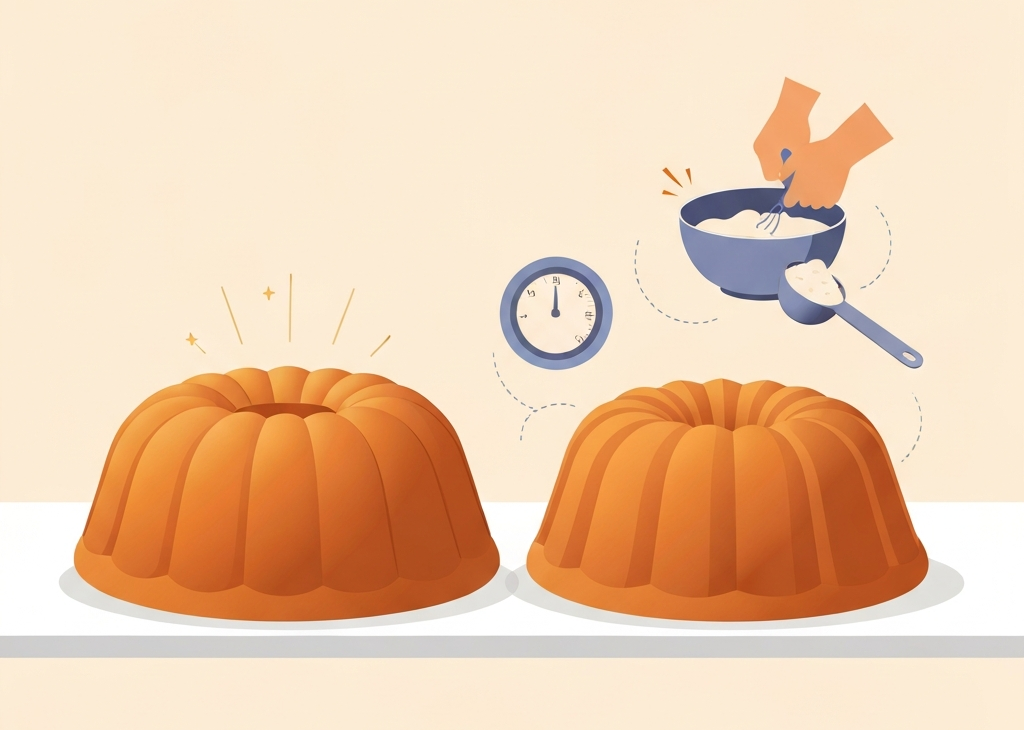
A sunken Bundt cake can be a disheartening sight, transforming a beautiful dessert into a culinary disappointment. While many factors can contribute to this common baking problem, understanding the science behind it can help you achieve that perfect, domed Bundt every time. The shape of the Bundt pan itself, with its central tube, plays a crucial role in how heat circulates, affecting the cake’s rise and structure.
Common Culprits Behind a Sunken Bundt
Several things can lead to a Bundt cake sinking in the middle. Overmixing is a frequent offender. When you mix cake batter too much, especially after adding flour, you develop too much gluten. This can make the cake structure too tough to hold its shape as it bakes, causing it to collapse. Another issue is oven temperature. If your oven runs too cool, the cake might not set properly before gravity takes over. Conversely, an oven that’s too hot can cause the outside to bake too quickly, forming a crust that traps the still-liquid interior, leading to a sinkhole.
Incorrect ingredient measurements also play a significant part. Too much liquid or fat, or not enough flour or leavening agents (like baking powder or baking soda), can result in a weak cake structure that can’t support itself. The central tube of the Bundt pan is designed to help the cake bake evenly. If the batter isn’t distributed properly around the tube, or if the pan isn’t greased and floured adequately, you can get uneven baking and a sunken middle.
Quick Fixes and Prevention Strategies
The good news is that sunken Bundt cakes can often be salvaged, and future sinkholes can be prevented.
Salvaging a Sunken Cake
If your Bundt cake has already sunk, don’t despair! You can often fill the hollow center with delicious toppings. Whipped cream, fresh fruit, a glaze, or even a complementary cake filling like the one found in a peach Bundt cake recipe can hide the imperfection. You can also carefully trim the sunken parts and use them for cake pops or trifles.
Prevention is Key
To avoid a sunken Bundt in the first place, focus on these tips:
- Accurate Measuring: Use the spoon and level method for flour to ensure you’re not packing too much in.
- Gentle Mixing: Mix wet and dry ingredients until just combined. Stop as soon as no dry streaks remain.
- Oven Calibration: Ensure your oven is at the correct temperature. An oven thermometer can be a valuable tool.
- Proper Pan Preparation: Grease and flour your Bundt pan thoroughly. Consider using a baking spray with flour.
- Cooling Technique: Let the cake cool in the pan for the time specified in the recipe, usually 10-20 minutes, before inverting. This allows the cake to firm up slightly.
By understanding these common pitfalls and implementing simple preventative measures, you’ll be well on your way to baking beautiful, perfectly domed Bundt cakes. For more detailed information on baking science, you can explore resources from organizations like the National Institute of Standards and Technology (NIST) or general baking advice from reputable culinary sites.